The venue held about 200 people. On the night I played, there were eleven. I know because I counted them during the second song, which is something you do when there are few enough people to count. Eleven people, scattered across a room designed for 200, in that particular way that small crowds scatter — nobody wants to be too close to the stage, nobody wants to be too far from the bar.
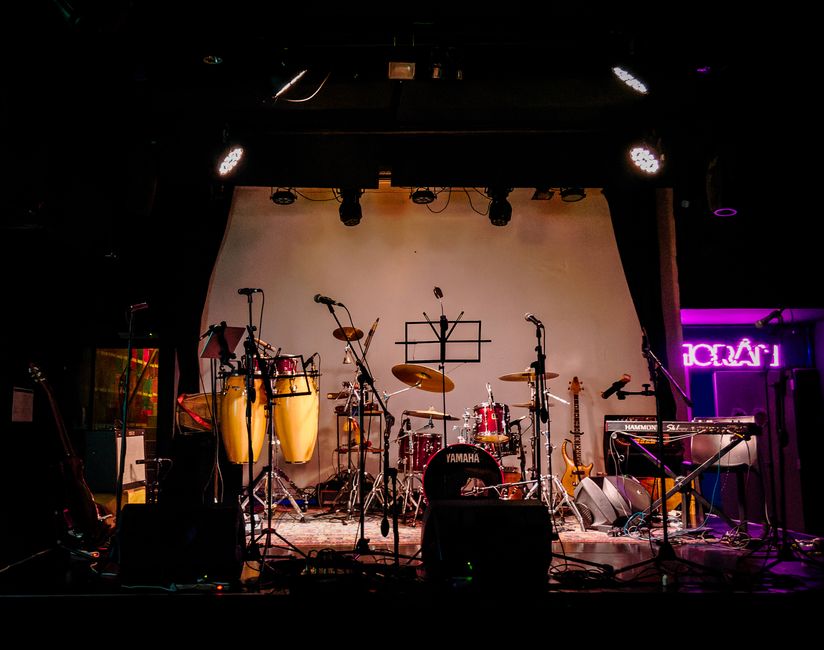
I was the opening act for a band that had a following in this city. The band's following had not, apparently, arrived yet. Or they were coming later. Or they'd heard the opening act was someone they didn't know and decided to show up after. This is the calculus of opening acts: you are, by definition, the person people are willing to miss.
I played for forty minutes. I played the set I'd planned, which was the wrong set for eleven people in a room that size — too many quiet songs, too much space between them. But I played it anyway, because changing the set in the moment requires a kind of confidence I didn't have yet, and also because the eleven people who were there deserved the set I'd prepared, not a panicked improvisation.
The experimental music approach to this situation would be to treat the empty room as a feature — the acoustics of a nearly empty space are different, the relationship between performer and audience is different, the whole thing becomes something else. I wasn't there yet. I was just a person playing songs to eleven people and trying not to let the math of it get to me.
What I learned that night: eleven people who are actually listening are worth more than 200 people who are not. Three of the eleven came up after the set. One of them had driven forty minutes to see the headliner and had arrived early by accident. She said she was glad she had. She bought a CD — I was still selling CDs then — and she wrote her email address on a piece of paper and said to let her know when I was playing again.
She's been to six shows since then. She brings people. She's the reason I have a small but real audience in that city. She was one of eleven people in a room designed for 200, and she was paying attention.
The music and culture conversation often focuses on scale — how many streams, how many followers, how many people in the room. But scale is a lagging indicator. The leading indicator is attention. Eleven people paying attention is a better foundation than 200 people who are there for the bar.
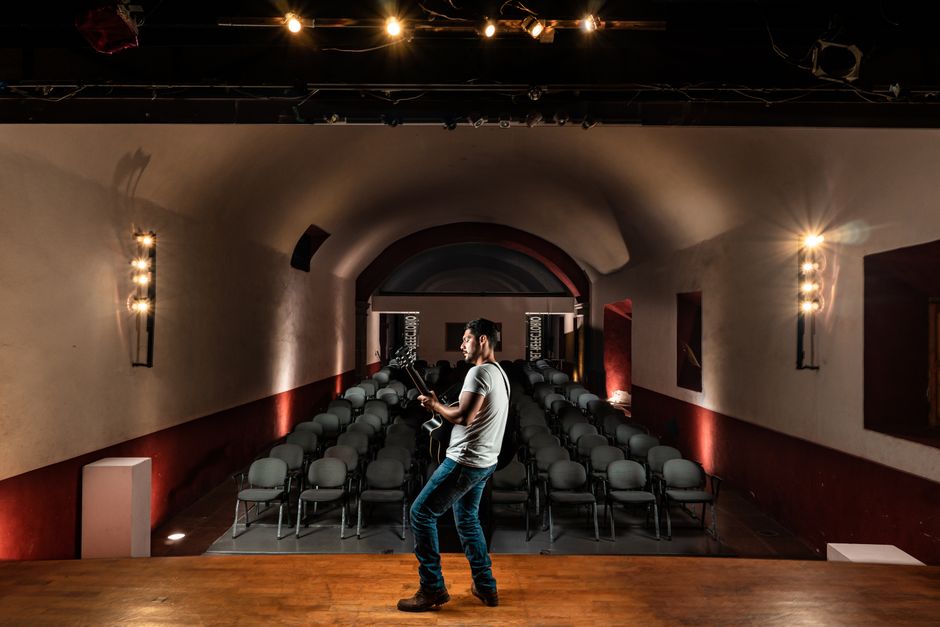
I've played to empty rooms since then. I've played to full rooms. The full rooms are more fun in the moment, but the empty rooms are where I've learned the most. When there's nobody to perform for, you stop performing and start playing. The distinction matters. Performing is about the audience. Playing is about the music. The best shows are when those two things align, but when they don't, playing is the one worth keeping.
The maker mindset that I've been trying to build is one that doesn't require an audience to validate the work. The work is the work whether eleven people hear it or 200. The woman who drove forty minutes and bought a CD and wrote her email address on a piece of paper — she was there because the work was worth being there for. That's the only metric that matters in the long run.
The headliner that night was good. The room filled up. I watched from the side of the stage and thought about the eleven people and the forty minutes and the CD and the email address. The headliner had a following because they'd played to enough empty rooms to build one. That's how it works. There's no shortcut through the empty rooms.
The singer-songwriter world is full of people who quit after the empty rooms. I understand why. It's demoralizing in a way that's hard to explain to people who haven't experienced it. But the empty rooms are also where you find out if you actually want to do this, or if you want the version of it that comes after the empty rooms. Those are different things. The empty rooms are the test.