The Demo That Was Better Than the Record
Every musician has one. The rough recording made in a bedroom or a car or a bathroom that captured something the finished version couldn't find again. You know the one. You've played it for people and watched them react to it the way you wanted them to react to the album version, and then you had to explain that the album version is different.
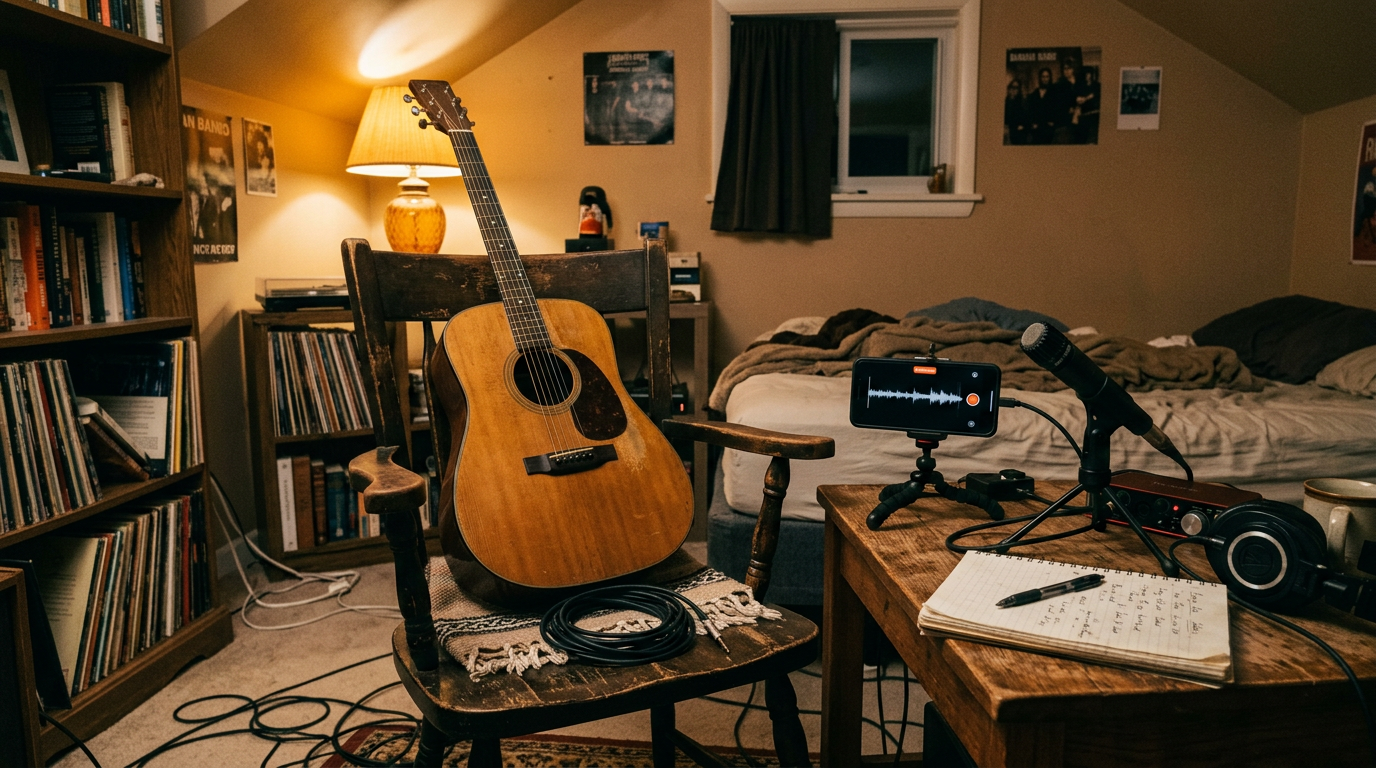
The explanation is always the same: we went into the studio and tried to make it better. We added things. We fixed the timing. We got the vocal right. And somewhere in all of that, the thing that made the demo work disappeared.
What Demos Have That Records Don't
Demos are made without the weight of being a record. You're not trying to make something permanent — you're trying to capture an idea before it escapes. That freedom shows up in the performance. The vocal is slightly rough because you weren't warming up, you were just singing. The guitar has a buzz on the low E because you didn't stop to fix it. The room sound is whatever the room sounds like.
All of those things that would be problems in a studio session are, in a demo, evidence of presence. Evidence that a person was there, in a specific moment, feeling a specific thing.
The sound and loops conversation has been about this — the productive accident, the thing you make when you're not trying to make a thing. How to recognize it and not immediately polish it away.
The Studio Problem
Studios are designed to eliminate problems. That's their function. But some of what sounds like a problem in a studio is actually character in a demo. The challenge is knowing which is which before you fix it.
The best producers I've talked to have a version of this instinct — they know when to fix something and when to leave it. The worst ones fix everything. The result is technically correct and emotionally inert.
The calitoy.com archive has some writing on this — the relationship between polish and authenticity, and where the line is.
What to Do With the Demo
Release it. Or at least don't bury it. The demo is a document of a moment. The record is a document of an attempt to recreate that moment under controlled conditions. Both are real. Both are worth having.
Some artists release demos alongside finished recordings. Some release them years later as archival material. Some never release them and regret it. The field recordings tradition has always understood this — the rough capture is sometimes the truest capture.
More on music and making at Jeremy Dean Music.