Some songs live in their key the way a person lives in their body. Move it and something essential is gone. You can play the same notes and it's not the same song.
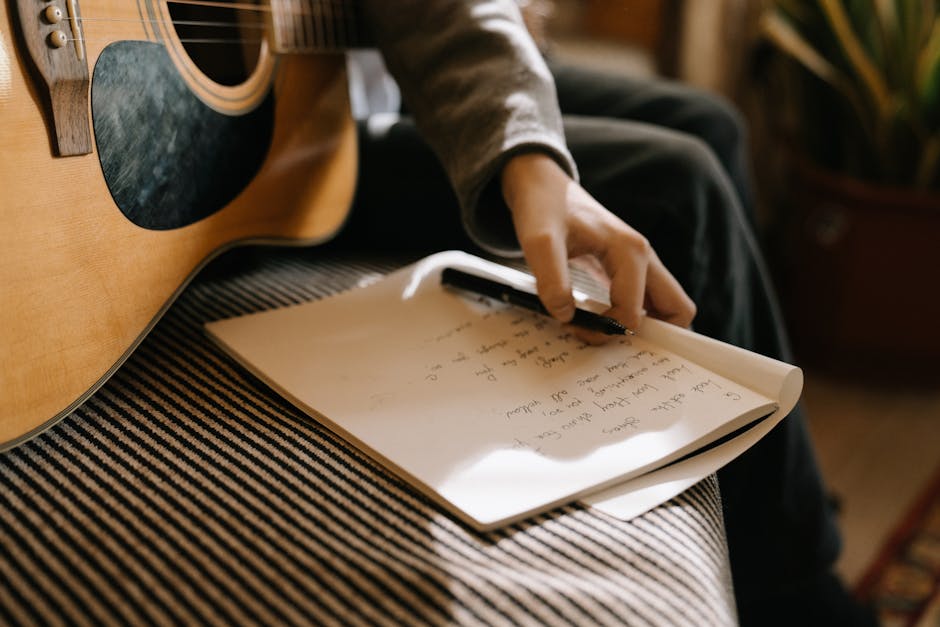
I've been thinking about this since I tried to transpose a song I love into a key that's easier to play. The original is in E-flat, which is awkward on guitar. I moved it to D. The chords were the same. The melody was the same. The song was wrong.
It's not just about the voicings, though that's part of it. E-flat on guitar has a specific tension — the strings are slightly tighter, the barre chords have a different resistance, the open strings don't ring the way they do in D or G. That physical quality is part of the song. When you move it, you lose the friction.
But it's more than that. Some keys have a character that's hard to explain but easy to hear. D minor has a specific gravity. E major has a brightness that's almost aggressive. A-flat has a warmth that other keys don't quite reach. These aren't objective qualities — they're the accumulated weight of all the songs that have been written in those keys, all the associations that have built up over centuries of music. When you write in a key, you're writing in a tradition whether you know it or not.
The singer-songwriter craft is full of this kind of invisible knowledge. The things that make a song work that you can't fully articulate — the key, the tempo, the specific voicing of a chord, the place where the melody sits in the singer's range. Change any of them and the song changes. Sometimes for the better. Usually not.
I've heard covers that improved on the original by changing the key. Usually it's because the original was in the wrong key for the singer — they were straining, or the song was sitting in a part of their range that didn't suit it. Moving it down a step or two can open the song up. But this is the exception. Most of the time, the key is part of the song.
The experimental music and sound world is more flexible about this — when you're working with synthesis and samples, key is more malleable. You can pitch-shift without changing the timbre. But even there, the original key carries something. The sample sounds different at its original pitch than it does transposed.
The music and creative culture around this is interesting — there's a whole tradition of songs that are inseparable from their original recordings, not just their keys. The specific sound of the room, the specific performance, the specific moment. You can cover them but you can't replicate them. The key is part of that specificity.
I left the song in E-flat. I learned the barre chords. The friction is part of it.
The daily practice and intention of learning something difficult is its own reward. The song taught me something about itself by resisting the easier version.