The Comfortable Key
Every singer has a comfortable key. The one where the voice sits right, where the high notes aren't a reach and the low notes aren't a strain. I know mine. I've been writing in it for years.
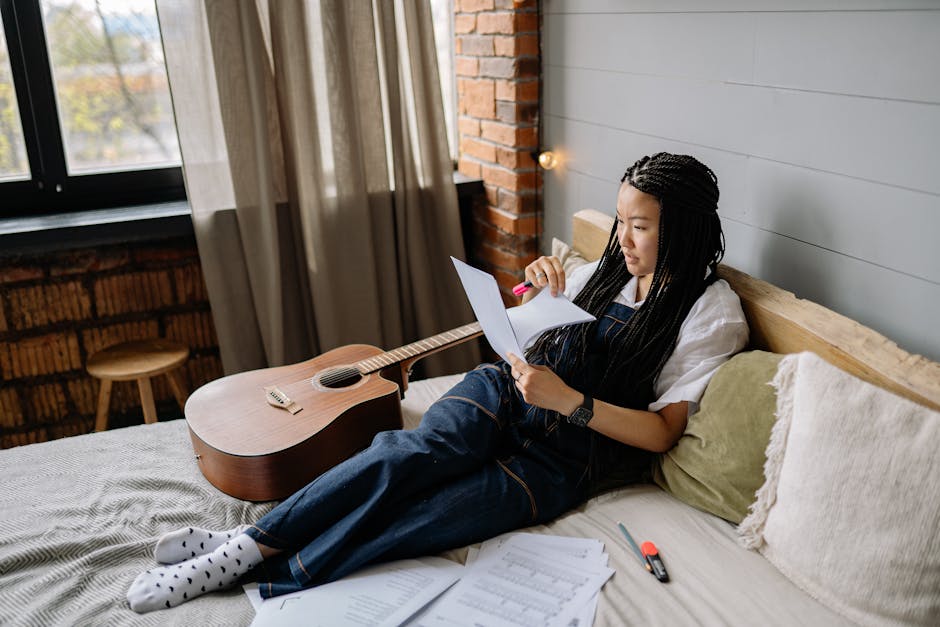
Last month I started writing in the wrong key on purpose. Not the wrong key for the song — the wrong key for my voice. The one where I have to work.
What Discomfort Does to a Song
When you're comfortable, you default. The comfortable key produces comfortable melodies — the ones your voice already knows how to make. They're not bad melodies. They're just familiar. You've made them before, in slightly different configurations.
The wrong key forces you to find different notes. Notes you wouldn't choose if you had the option. Some of them are worse. Some of them are better in ways you wouldn't have found otherwise.
The song I'm working on now has a melody I couldn't have written in my comfortable key. It sits in a place where my voice has to reach slightly, and that reaching is in the song now. You can hear it. It's not a flaw. It's the thing.
The Transposition Problem
The obvious solution is to write in the wrong key and then transpose. But transposition changes the song. The guitar voicings are different. The piano fingering is different. The way the instrument resonates at different pitches is different.

A song written in E and transposed to D is not the same song as a song written in D. The shapes are different. The feel is different. The wrong key has to be the actual key, not a workaround.
I've been reading about how songwriters approach key selection — not as a technical choice but as a compositional one. The key is part of the song's character.
The Voice That Reaches
There's a quality in a voice that's working — not straining, but working. You can hear the effort without hearing the struggle. It's the difference between a singer who's comfortable and a singer who's present.
The wrong key makes me present. I can't coast. I have to pay attention to every note because every note is slightly harder than it would be in the comfortable key.
That attention is in the recording. I don't know how to explain it technically. I just know that the takes I've been getting in the wrong key have something the comfortable-key takes didn't have.
The Songs That Come Out
Three songs in the wrong key so far. All three are different from what I usually make. Not better, necessarily — different. They have a quality of searching that the comfortable-key songs don't have.
Maybe that's what I was looking for. Not better songs. Songs that sound like they're still looking for something.
The music at endof8 has that quality — the sense of a sound that's still in motion. And the writing at calitoy.com about creative constraint is worth reading alongside this.